 Roderik
 Attention to indoor climate is growing rapidly. For years, organizations primarily focused on energy performance, but the emphasis is increasingly shifting toward health, comfort, and the well-being of building occupants. At the same time, developments such as EPBD IV, GACS, and smart building technologies are making building performance more transparent and measurable than ever before.
Indoor Climate Has a Direct Impact on Performance
We spend the majority of our time indoors, whether in offices, schools, healthcare facilities, or public buildings. Factors such as air quality, temperature, humidity, acoustics, and lighting determine how comfortable a building feels and have a direct impact on health, well-being, and productivity.
Research shows that poor indoor climate conditions can lead to issues such as fatigue, reduced concentration, and increased absenteeism. Conversely, a healthy indoor environment contributes to more pleasant, healthier, and higher-performing workplaces.

Monitoring Is Becoming Increasingly Important
With the introduction of new regulations covering building performance, the need for reliable monitoring continues to grow. Building owners and facility managers are increasingly required to demonstrate both energy performance and indoor environmental quality.
As a result, the focus is shifting from occasional measurements to continuous monitoring. Not only to comply with regulations, but more importantly to make better decisions based on objective, real-time data.
From Data to Insight
Many buildings today are equipped with IoT sensors, Building Management Systems (BMS), and energy meters. However, bringing all this information together remains a challenge.
A high CO₂ level, a comfort complaint, or an abnormal temperature reading only tells part of the story. The real value emerges when data from IoT sensors is combined with information from the Building Management System, technical installations, energy consumption, and building usage.
This creates valuable insight into patterns, trends, and anomalies. Not only what is happening, but more importantly why it is happening.
From Insight to Action with PULSE CORE
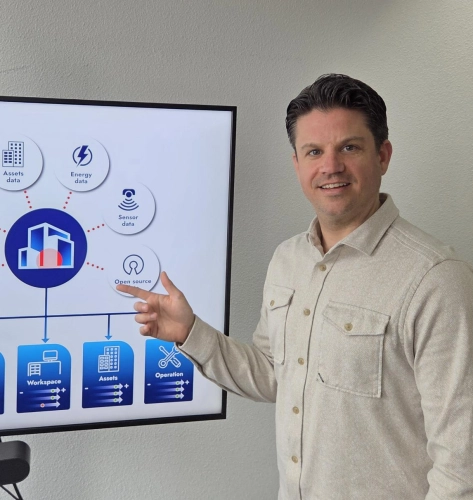
PULSE CORE’s Comfort solution brings together data from IoT sensors, Building Management Systems, and energy-related installations into a single centralized platform. This provides a continuous view of the performance of rooms, buildings, and entire real estate portfolios.
By combining comfort measurements with building data, organizations can:
This transforms comfort management into a continuous improvement process where data is translated into meaningful action.

Comfort as part of a smart building
A healthy indoor climate is not achieved through individual sensors or standalone dashboards. It requires continuous monitoring, analysis, and optimization. By combining real-time insights with intelligent building control, organizations can create buildings that perform better for both occupants and facility managers.
Ultimately, indoor climate management is not about data. It is about people and the ability to make the right decisions based on reliable insights.