Menu
Back

Future-proof indoor climate

Auteur afbeelding Roderik Roderik
Regulations

Providing a pleasant and healthy space for everyone who works, studies, or visits your building is of great importance to us. The indoor climate (Indoor Environmental Quality or IEQ) has been transformed from a secondary matter into a top priority. Through legislation and ambition, we see that a proactive, safe, and healthy building environment is the new standard.

Legislation and quality marks

This shift is being accelerated by mandatory legislation. The revised European EPBD IV directive states that sustainability must never come at the expense of the indoor environment and mandates continuous monitoring of indoor environmental quality as of May 29, 2026. Linked to this, BACS legislation (Building Automation and Control System) compels owners of non-residential buildings with climate control systems of 290 kW or more to implement smart, data-driven control and energy monitoring as early as 2026. Moreover, certification schemes such as WELL and BREAM set high standards for the condition of the indoor climate. Is your organization ready for this yet? 

Sectors in Motion 

In addition to general regulations, there are sector-specific drivers for optimizing air quality and thermal comfort. The EPBD IV guidelines and the Green Deal are the common thread running through all these branches.

Education: The updated Fresh Schools 2025 Program of Requirements sets stricter requirements for air quality, in which smart ventilation is directly linked to continuous CO2 concentrations to enhance learning capacity. Furthermore, since July 1, 2025, it is legally mandatory under the Buildings and Living Environment Decree that a working CO2 meter be present in all classrooms in primary and secondary education. Read how we achieve this at, among others, the Carmel College

Healthcare: Health insurers are increasingly requiring the Environmental Thermometer for Healthcare in their contracts. This certification scheme was developed by the Environmental Platform for the Healthcare Sector (MPZ) in collaboration with SMK and helps healthcare institutions meet the goals of the Green Deal Sustainable Healthcare 3.0. This environmental thermometer sets strict requirements for indoor air quality; the CO2 value in rooms must continuously remain below 1200 ppm.

Industry: In the industrial sector, the IEQ focus is increasingly shifting towards integrated office environments and major infrastructure hubs. Driven by the Working Conditions Act, data is crucial for monitoring the working climate. A great practical example of this is Eindhoven Airport. Here, we are 'smartening' the meters to guarantee a healthy indoor climate while simultaneously facilitating the transition to fully emission-free operations.

Culture: In museums, archives, and other heritage institutions, an extremely stable microclimate is indispensable for the preventive conservation of fragile heritage as well as visitor comfort. In this regard, the Cultural Heritage Agency (RCE) program of requirements for heritage institutions has become an important guideline. Together with models such as 'Climate Management in 9 Steps', this publication offers a framework to translate the complex legislation and regulations surrounding indoor climate into specific targets for temperature and relative humidity. Through 24/7 monitoring, we ensure these stricter requirements are implemented in practice, so that damage to collections is prevented.

Offices: In addition to complying with legislation, offices can also invest in a healthy indoor environment in accordance with the Healthy Offices Program of Requirements drawn up by Binnenklimaat Nederland. We assist our clients with a monitoring plan for Healthy Offices; we have carried out this plan and implementation for the Municipality of Amsterdam, among others.

Government: Public and social real estate must set a good example. Schemes such as the DUMAVA subsidy accelerate the sustainability of this real estate, ensuring that comfort and energy neutrality go hand in hand. Provinces and municipalities often have a diverse portfolio of real estate, which frequently requires a specialized, tailored approach. 

PULSE as integrator 

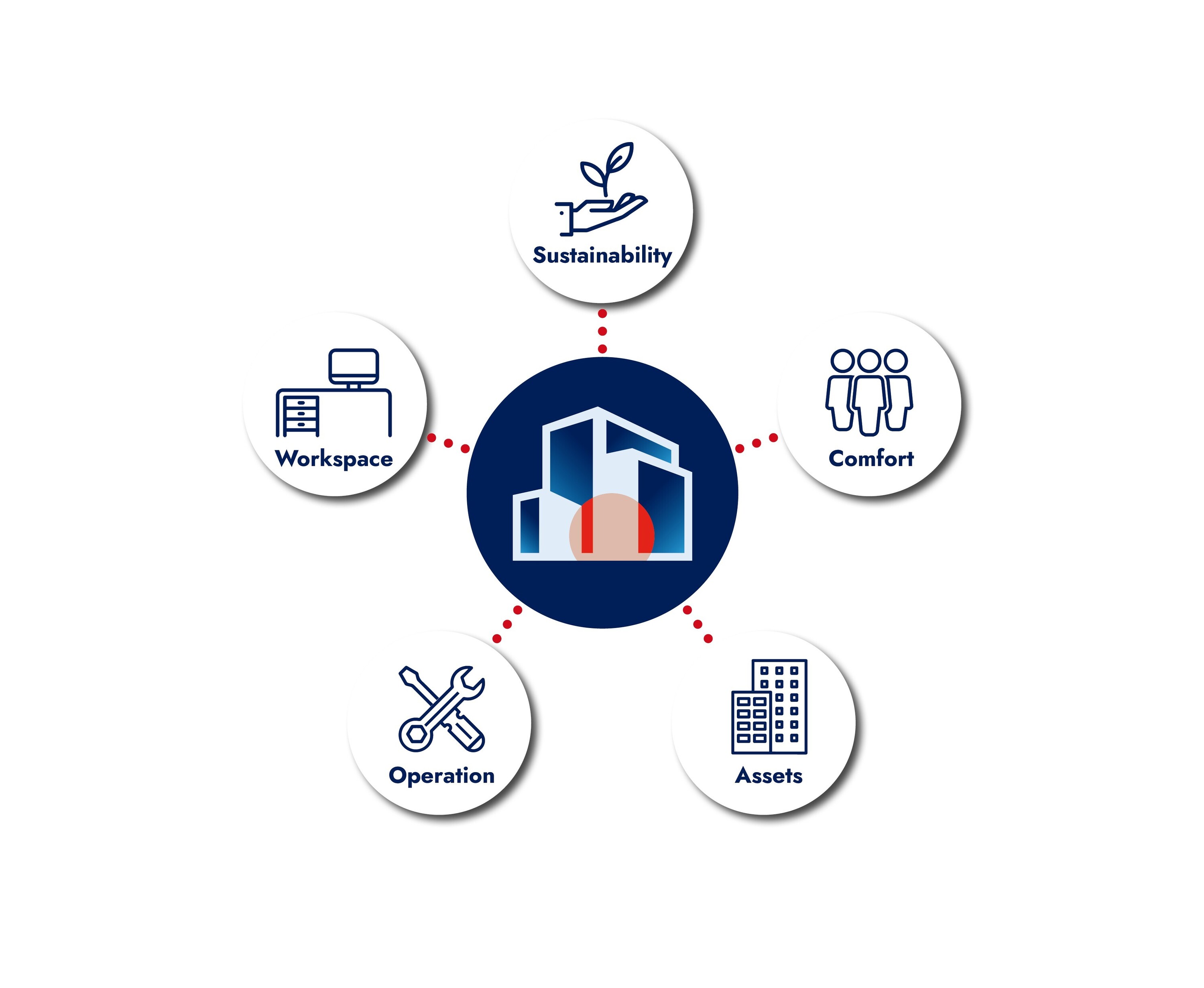
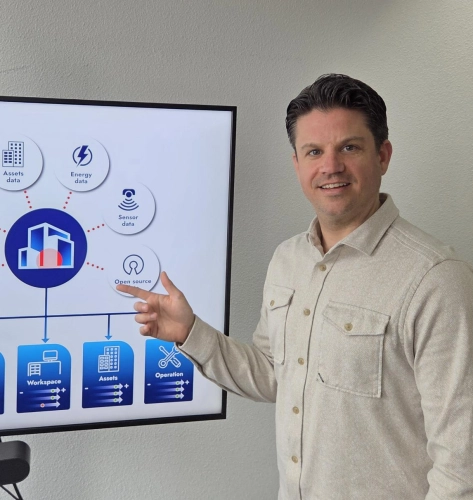
To meet these complex requirements, our approach and the integration of data and expertise are essential. As part of SPIE, PULSE CORE functions not only as a software platform but as a complete integrator for the performance of your entire technical HVAC installation. In doing so, we effortlessly utilize the client's Building Management Systems, meters, and IoT. While the GACS guidelines fundamentally only require technical control, PULSE CORE functions as the control system that, through building data, fault detection, and diagnostics, enables our specialists and technicians to keep your building installations running optimally and keep your users healthy.  

Comfort: Putting people first by focusing on a healthy, safe, and pleasant indoor climate for every user, coupled with an installation that is as energy-efficient as possible.  

Sustainability: Eliminating energy waste and reducing the CO2 footprint, while maintaining an optimal indoor climate.  

Workspace: Dynamically optimize office and workspaces based on current occupancy rates and comfort data. 

Asset Monitoring: Gain insight into the performance of building systems and building-related installations. By continuously detecting deviations, you aim for an optimal lifespan with predictive maintenance. 

Operation Support: Provide facility teams with the right tools immediately. We convert data into actions and dashboards, making building management proactive and efficient.

Discover what new legislation means for your organization and how you can work step by step towards a healthy, compliant, and energy-efficient indoor climate.

Regulations

Kies een taal

Deze pagina is beschikbaar in de volgende talen:

Cookie preferences

We use our own cookies and third-party cookies for statistical and analytical purposes to provide you with the best experience on our website.

You can find more information in our cookie policy.
We care about your privacy

You can set your cookie preferences by accepting or rejecting the various cookies described below.

Necessary

Necessary cookies help make a website more usable by enabling basic functions such as page navigation and access to secure areas of the website. Without these cookies, the website cannot function properly.

Required
Preferences

Preference cookies allow a website to remember information that changes the way the website behaves or looks, such as your preferred language or the region you are in.

Statistics

Statistical cookies help website owners understand how visitors interact with websites by anonymously collecting and reporting information.

Marketing

Marketing cookies are used to track visitors across different websites. The intention is to display advertisements that are relevant and appealing to the individual user, and therefore more valuable to publishers and third-party advertisers.