 Roderik
 The introduction of Building Automation and Control Systems (BACS) raises questions for many organizations. New regulations often mean additional obligations, but this development actually offers opportunities to manage buildings smarter and more efficiently.
According to Roderik Müller and Ben Veenstra, experts in data-driven building management at PULSE CORE and SPIE, the regulations are still too often viewed as an administrative burden. Whereas in practice, GCS can actually help to gain better insight into how buildings actually function.
“When organizations gain structural insight into the performance of installations, a completely different conversation about building management emerges,” say Roderik and Ben. “You see where energy is consumed, where installations are not functioning optimally, and where improvements are possible.”
Buildings are becoming increasingly complex. Installations, energy supplies, and usage patterns are constantly changing. At the same time, the pressure to reduce energy consumption and make buildings more sustainable is growing.
Therefore, insight is becoming increasingly important. By continuously monitoring installations and energy performance, it becomes visible where energy is lost and where performance can be improved. According to the experts at PULSE CORE, this is precisely where the added value of BACS lies: organizations gain insight not only into their energy consumption, but also into the functioning of installations and the use of buildings.
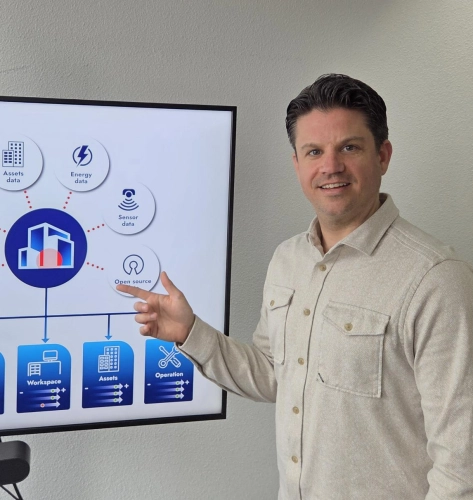
When data from installations, energy consumption, and building usage come together in a single platform, an integrated picture of a building's performance emerges. This makes it possible not only to comply with regulations but also to steer building performance in a more targeted manner. With these insights, organizations can, for example:
“Regulations such as BACS actually force organizations to take a structural look at their buildings,” Roderik and Ben explain. “But once you have that data, you can do much more with it. Then it suddenly becomes a tool for better building management.”
In the coming years, the role of data in building management will only increase. Organizations that actively monitor their buildings gain faster insight into deviations and can optimize installations in a more targeted way.
According to PULSE CORE, this presents a significant opportunity for organizations that want to make their buildings future-proof. By combining insight, monitoring, and analysis, a foundation is created for more efficient building management, lower energy costs, and more sustainable buildings.
What starts as an obligation can thus grow into a strategic tool for better building management.
Source: Duurzaam Gebouwd