 Mahsa
Mahsa An alarm is only as reliable as the data on which it is based. If the input is incorrect, the output is incorrect too. It is the classic principle of garbage in, garbage out and one of the biggest challenges for a platform that helps customers monitor and optimize their buildings.
PULSE CORE is SPIE’s smart building platform and is now connected to more than 1,000 buildings. It brings together asset information, work orders, quotations, and live data on energy consumption, indoor climate, and technical installations in one place. On top of this data sits an intelligence layer that detects anomalies, generates alarms, and provides insight into building performance.
But those insights are only valuable if the underlying data is reliable. And building data is far from always reliable.
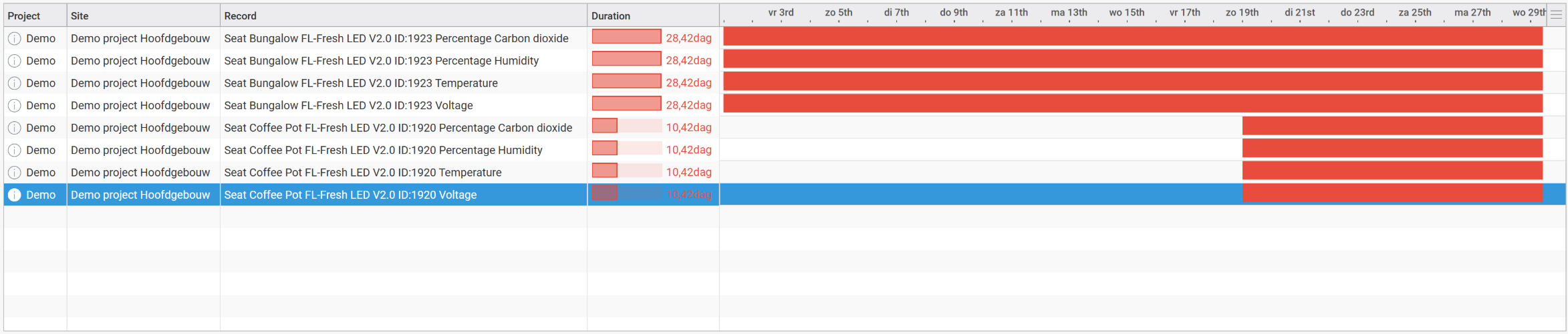
Buildings are complex data environments. Over the years, various systems, devices, suppliers, and software versions are added to the same building. As a result, small disruptions occur constantly: a sensor battery runs out, a gateway loses connection, a software update changes the data format, a meter is replaced but not configured correctly, or a network outage causes a gap in the measurement data. These problems often go unnoticed. Missing data does not automatically generate an error message, because the data simply isn't there. Yet the consequences can be significant. An alarm is not triggered because the necessary measurements are missing, or a dashboard shows an incomplete picture while everything appears normal at first glance.
In the context of Fault Detection & Diagnostics (FDD), poor data quality can lead to both false positives and false negatives. A false positive occurs when incorrect data incorrectly indicates a fault, while a false negative occurs when an actual fault remains undetected because essential data is missing. For example, a defective temperature sensor may transmit an unrealistic value and trigger an unnecessary alarm, while a sensor that no longer provides data may prevent a genuine fault from being detected.
That is why we do not view data quality as a periodic check or a process that runs in the background. It is an integral part of PULSE CORE. Reliable analyses, alarms, and reports are only possible with reliable data. This is what distinguishes PULSE CORE from a simple data validation pipeline. Data quality is not checked at a single point in time but across multiple layers within the platform. Both our Data Quality process and the intelligence layer continuously perform validations to reduce the risk of false positives and false negatives. As a result, information presented in dashboards, analyses, and alarms is verified multiple times before it reaches the user. Therefore, monitoring data quality is part of our daily operations.
We combine automated monitoring with human expertise.
A dedicated data quality dashboard continuously monitors all connected buildings and detects missing data streams, communication issues, and measurement gaps. Thanks to this automation, we can flag anomalies in more than 1,000 buildings, something that would be impossible manually.
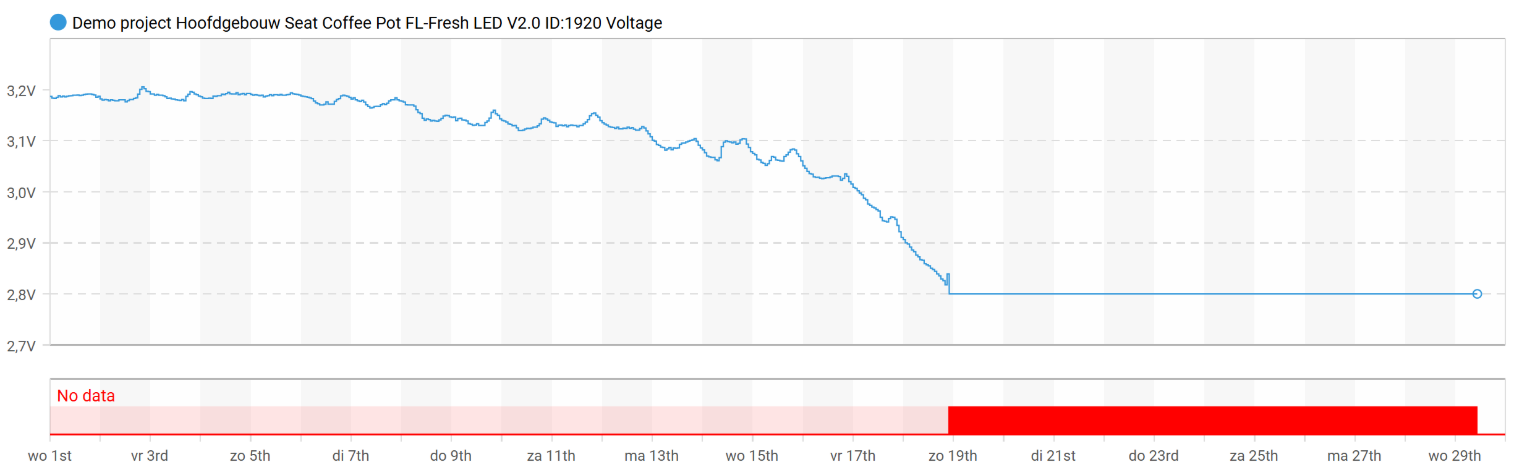
But flagging a problem is only the first step.
Our Data Quality team assesses every report and determines which anomalies require further investigation. Confirmed issues are registered as a ticket and followed up until the cause is identified and the problem is resolved.
Depending on the situation, we collaborate with SPIE consultants, client managers, external platforms such as Priva, or directly with the client. Sometimes the solution is simple, such as replacing a sensor battery. In other cases, it involves restoring a communication link, a problem with data storage, or a software error that needs to be resolved further down the chain.
We therefore do not limit ourselves to merely noting that data is missing or incorrect.
We investigate why this is the case and ensure that the problem is actually resolved. Through this continuous cycle of monitoring, assessing, investigating, and resolving, the data remains reliable, and we prevent minor disturbances from escalating into incorrect analyses or decisions.
For our clients, the result is clear: they can trust what they see.
When PULSE CORE generates an alarm, it is based on data whose quality is continuously monitored. And when a dashboard shows how a building is performing, facility managers and building owners can assume that the underlying data is reliable. This allows them to make decisions with confidence, without questioning whether the underlying data is correct. We have continuously developed this approach over the past few years, while PULSE CORE has grown into a platform with more than 1,000 connected buildings. At that scale, data quality is not a one-time check, but a continuous process and an essential component of reliable building intelligence. Because ultimately, the principle remains simple: garbage in, garbage out. Our task is to ensure that ‘garbage’ does not get a chance to enter the system. That is why we not only detect poor-quality data, but also ensure that it is validated at multiple levels before being used as the foundation for analyses, dashboards, and alarms. Only in this way can reliable building intelligence be achieved.