 Barry
Barry Digital twin helps AI detect failures faster, predict maintenance better, and deploy technical teams smarter.
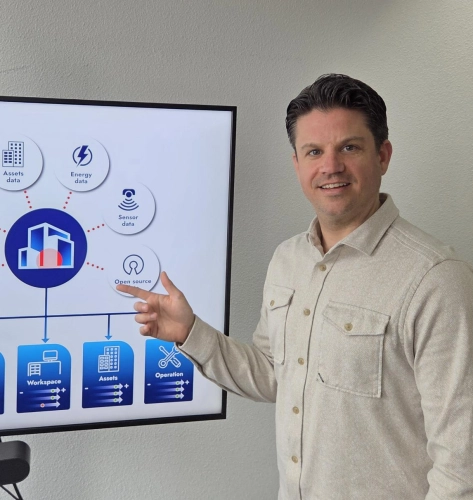
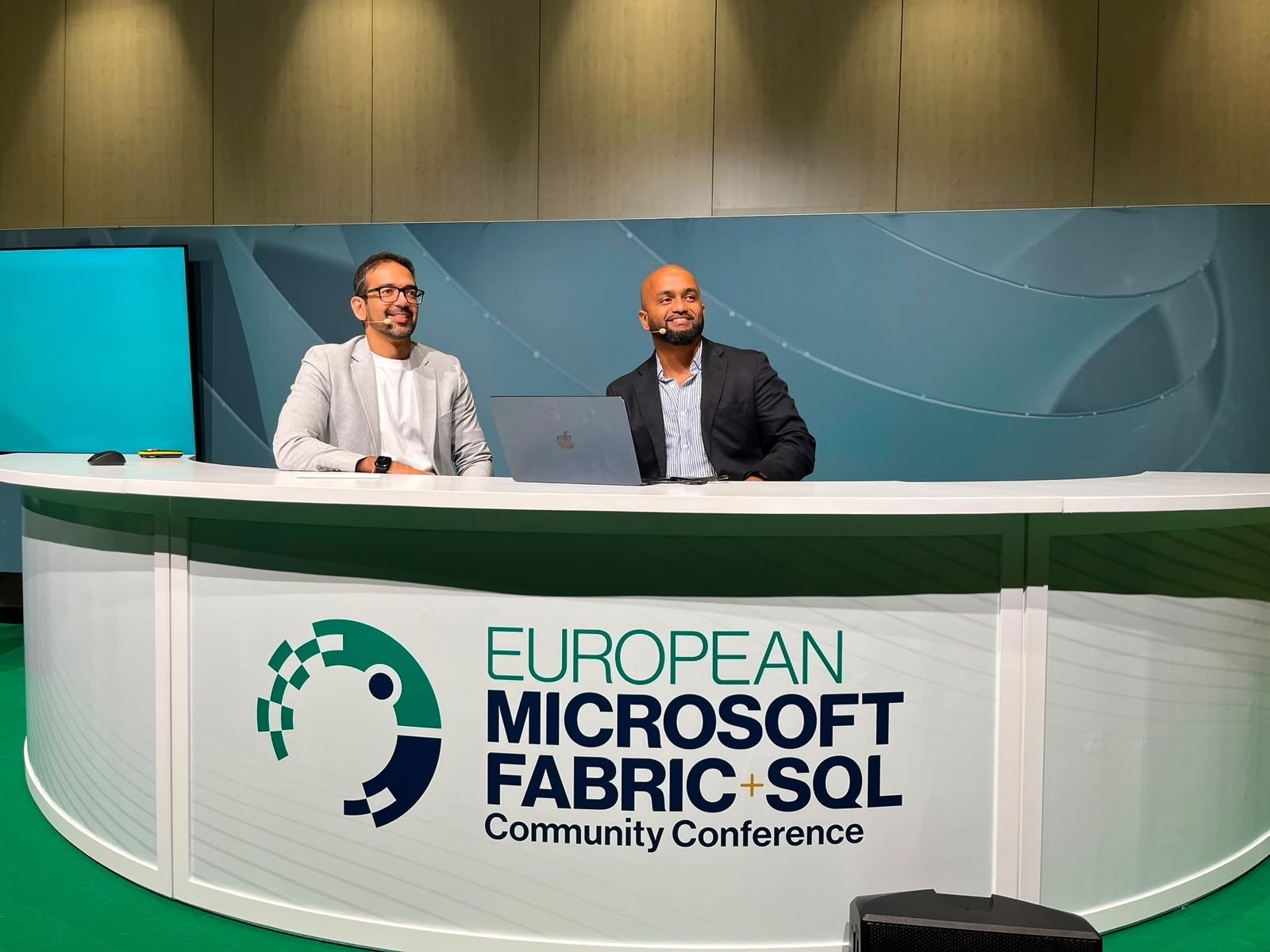
SPIE, the independent European leader in multi-technical services in the fields of energy and communications,is working with the new Fabric IQ functionality as one of Microsoft's selected partners. With this, SPIE is building a digital representation of buildings in which data from various systems is not only brought together but also given meaning and coherence. Yesterday, on September 29, Barry Tuip presented this application on behalf of SPIE during FabCon Europe in Barcelona, together with Yitzhak Kesselman, Corporate Vice President, Messaging and Real-Time Analytics at Microsoft, during the keynote ‘Trusted AI Starts with Fabric: Unified Real-Time Intelligence and IQ Context’.
.jpeg)
Data gets context
Buildings produce large amounts of data from sensors, building management systems, and maintenance and energy systems. That information is often scattered across various systems, making it difficult to establish connections and quickly determine the right course of action.
“The real value arises when you not only have data, but also know what that data means and how everything is interconnected,” says Barry Tuip, Manager PULSE CORE Digital Twins & Data Analytics at SPIE Netherlands. “If AI understands that context, we can more quickly identify the probable cause of a deviation and determine the best course of action. This allows us to prevent malfunctions sooner, deploy our people more effectively, and make our service delivery qualitatively better and more efficient.”
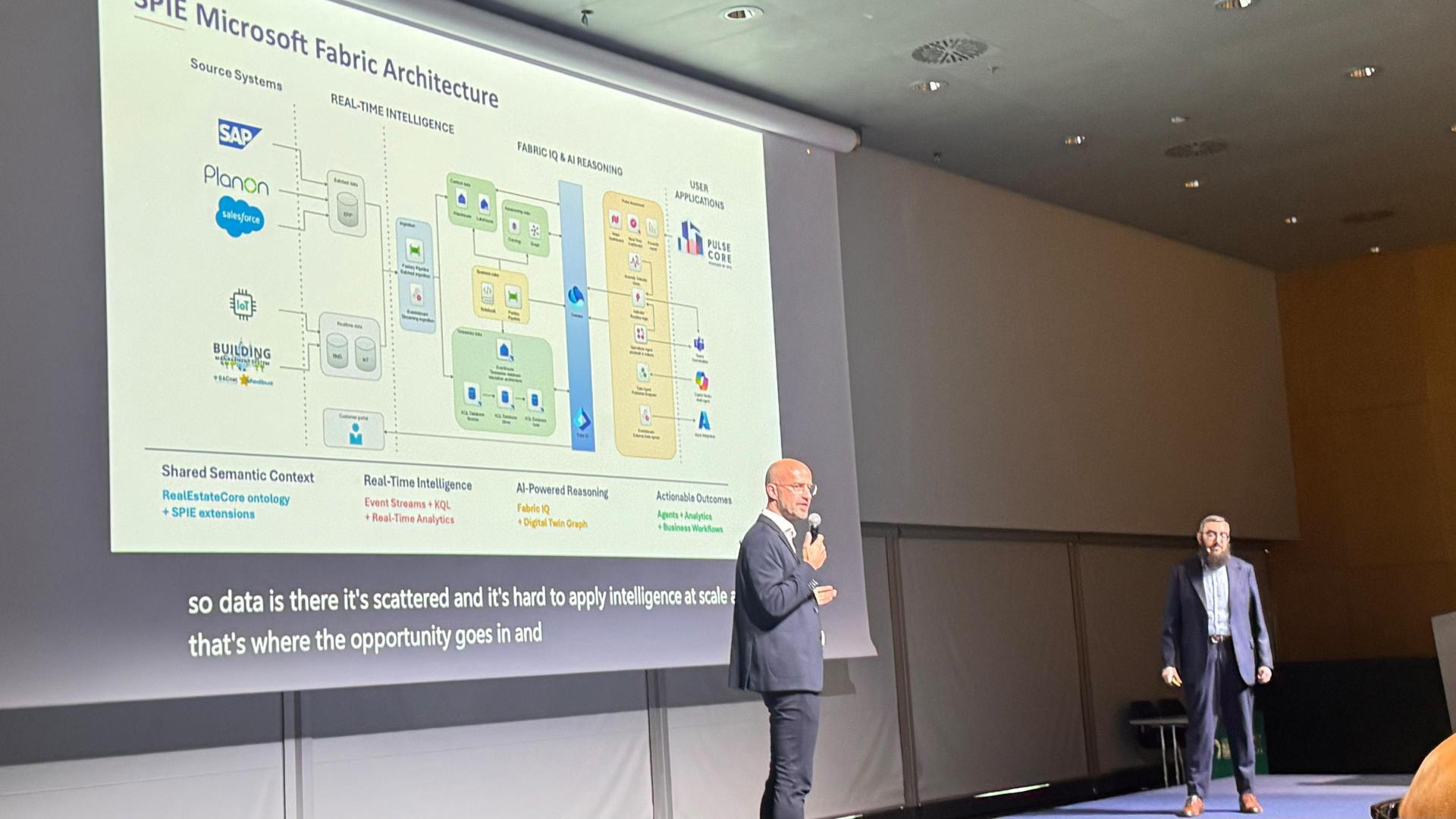
With Microsoft Fabric IQ, SPIE therefore captures not only data but also the relationships between them. Which sensor belongs to which installation, which installation serves which room, and what maintenance history is associated with it? This is how a digital twin is created: a digital representation of the building that gives AI the context to understand data in conjunction.
For Evert Lemmen, CEO of SPIE Netherlands, this touches upon SPIE’s broader digital strategy: “For us, data is not the endpoint. It is about placing data in the right context and using it to make better decisions. The approach we are currently applying within building management also offers opportunities for other areas of SPIE's work, from bridges and locks to energy installations and wind turbines. Those who know how to combine and utilize data smartly hold the future. AI is not a hype, but a game changer.”
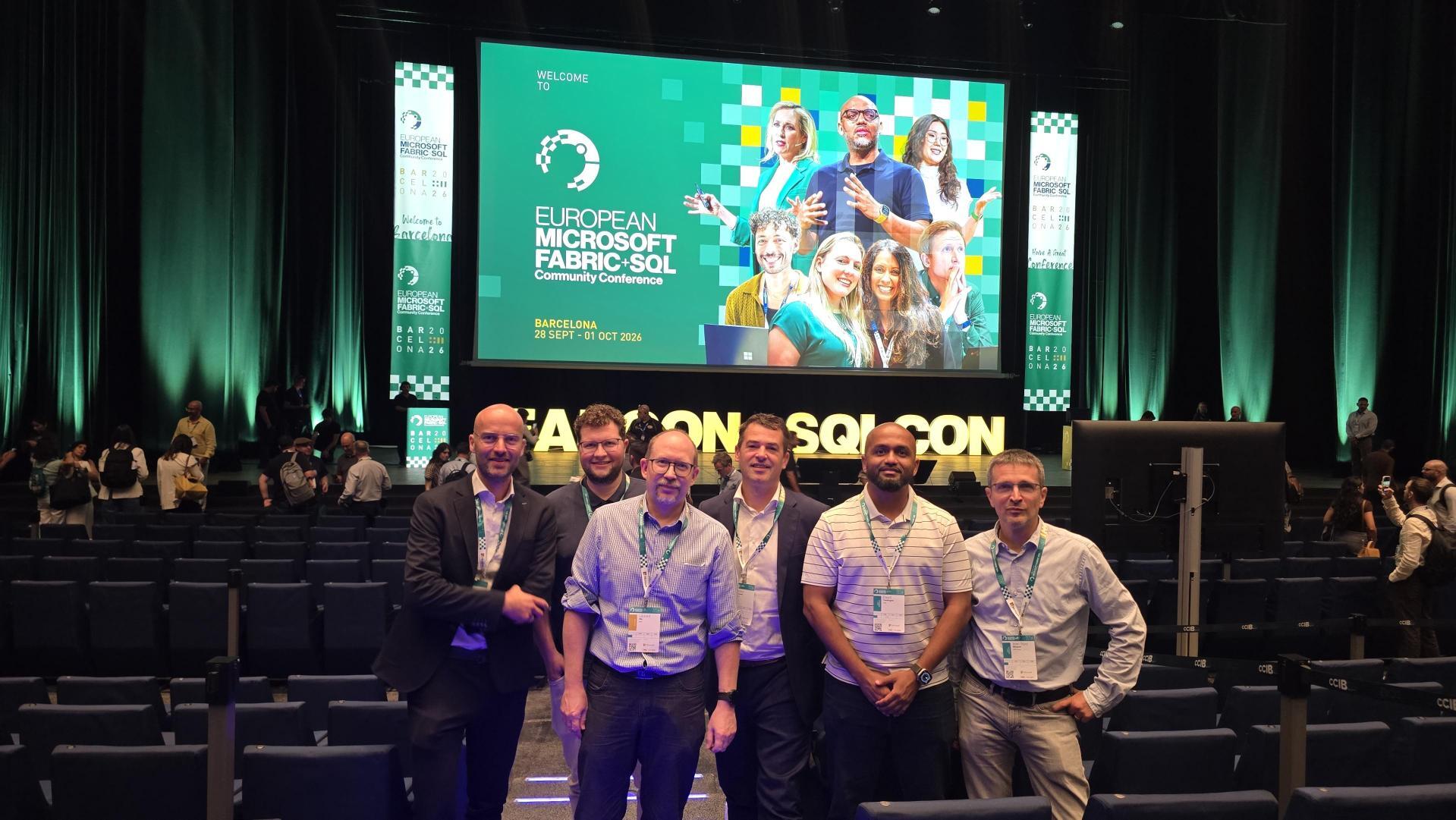
During FabCon Europe, Dawit Tarekegne, IT Enterprise Architect at SPIE and working from PULSE CORE, gave a presentation on the collaboration between SPIE and Microsoft Fabric. He shared key lessons learned from practice and demonstrated how SPIE uses Microsoft Fabric to more intelligently unlock, analyze, and apply data within its services.
.jpeg)
SPIE contributes to development
As a selected partner, SPIE already has access to the new functionalities of Fabric IQ before Microsoft makes the functionality generally available. Leading up to general availability, SPIE is applying the technology in practice and sharing its experiences with the Microsoft product team.
“The unique aspect is that we not only have early access to this technology, but can also contribute to its further development based on our practical knowledge,’ says Tuip. “At the same time, we are already gaining the experience needed to apply this technology more broadly within our services in the future.”
The knowledge gained is also being shared internationally within SPIE. “This allows other SPIE entities to examine how they can utilize the experiences from the Netherlands for their own activities and customer applications.”
.jpeg)